

 EN
EN VN
VN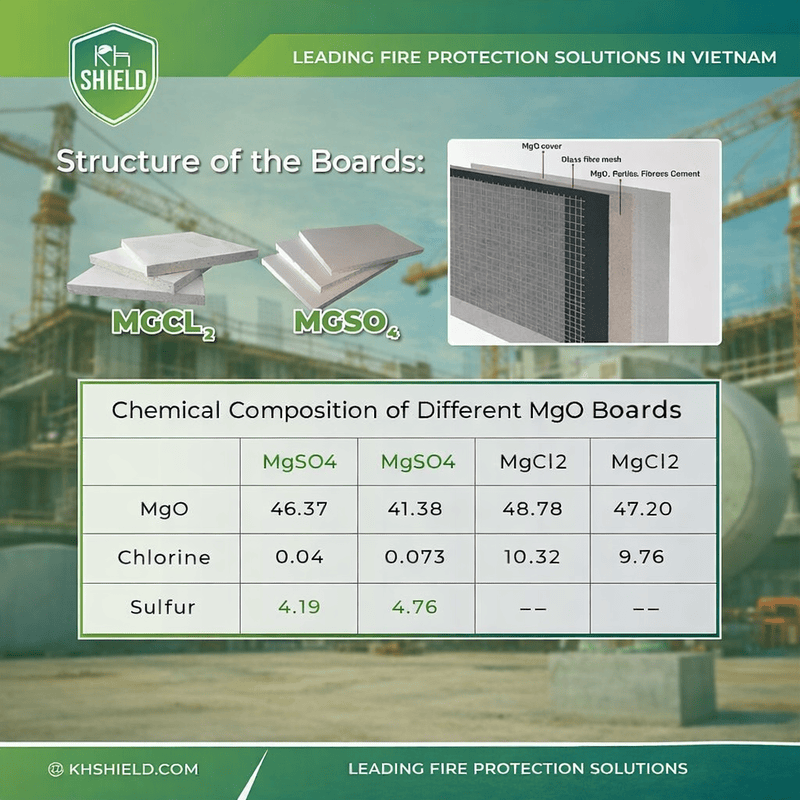


 04/02/2026
Thematic
MgCl₂ vs. MgSO₄: The Battle for Durability in Fire Protection Systems

31/12/2025


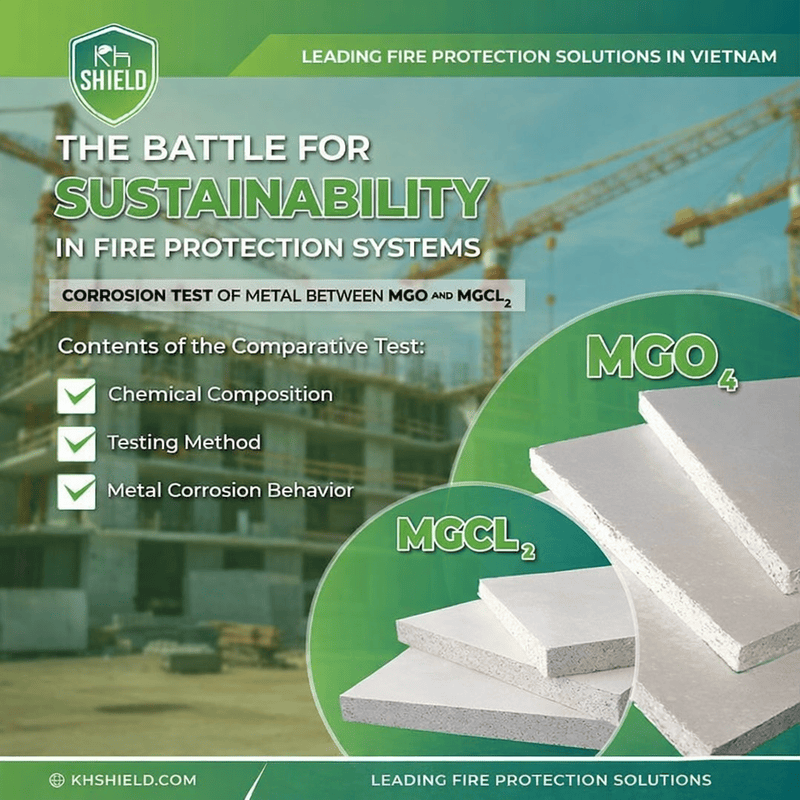
🔥 MgCl₂ vs. MgSO₄: The Battle for Durability in Fire Protection Systems
There are currently two types of Magnesium Oxide (MgO) fire-rated boards on the market.
They may look similar on the surface, but the long-term consequences after two years of use are worlds apart.
NỘI DUNG BÀI VIẾT
🔴Type 1: Salt-Based Boards (MgCl₂)
- Mechanism: Absorbs moisture from the air → Surface condensation (“board sweating”) → Saline liquid drips down and corrodes steel ducts and hanger rods.
- Consequences: Severe corrosion of the air duct system, material deterioration, risk of structural failure, and loss of fire-resistance performance.
🟢Type 2: KH Shield Boards (MgSO₄)
- Composition: Formulated with Magnesium Sulfate (MgSO₄) and FireShieldPRO® technology.
- Mechanism: Non-hygroscopic, with chloride content ≤ 0.1% (in accordance with ASTM C1152-04).
- Result: NON-CORROSIVE TO METAL — effectively protects the galvanized coating of air ducts, keeping them clean, intact, and corrosion-free over time.

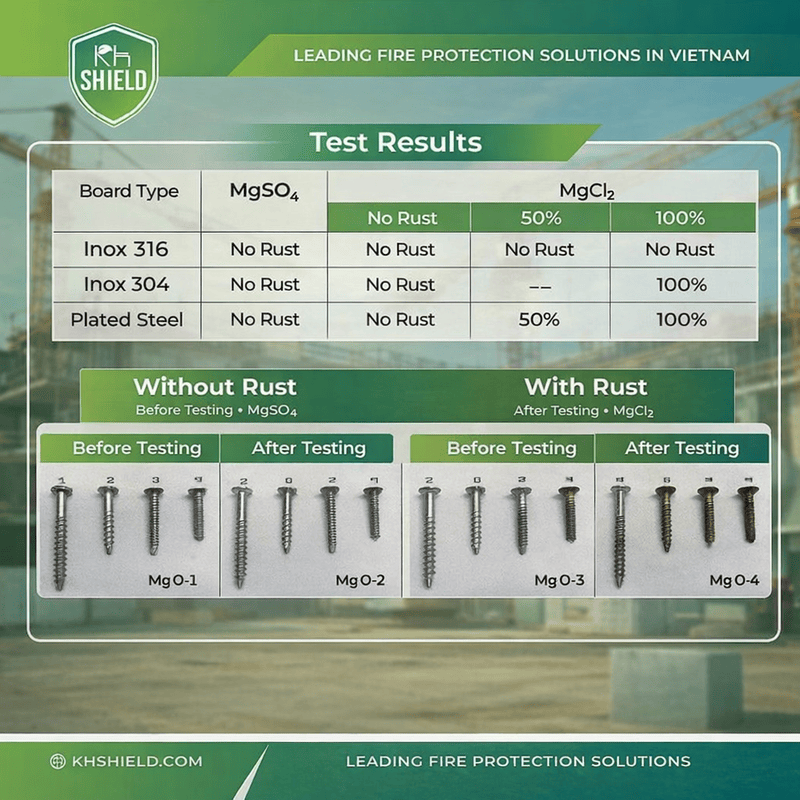
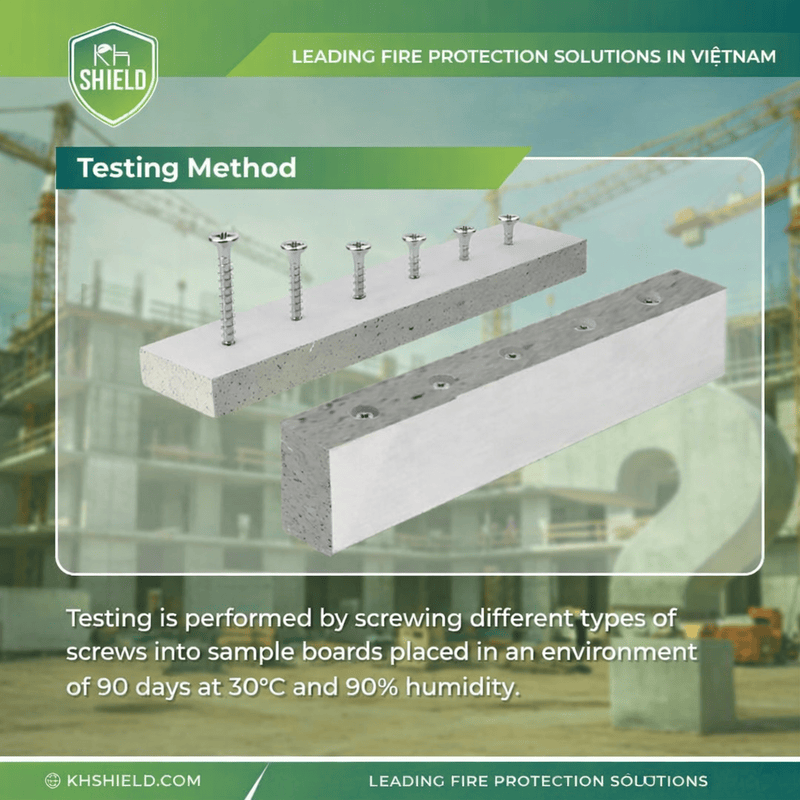
🧪CLIMATE CHAMBER TEST RESULTS (30°C – 90% RELATIVE HUMIDITY)
Based on comparative data derived from BRANZ (New Zealand) research:
- ❌ Screws installed into MgCl₂ boards:
Corrosion observed on 50%–100% of the surface area. - ✅ Screws installed into KHS boards (MgSO₄):
NO CORROSION DETECTED.
💡 ADVICE FOR CONTRACTORS
Don’t be tempted by short-term savings when choosing salt-based boards.
Future maintenance, warranty claims, and duct replacement costs can be up to 10 times higher than the initial material cost.
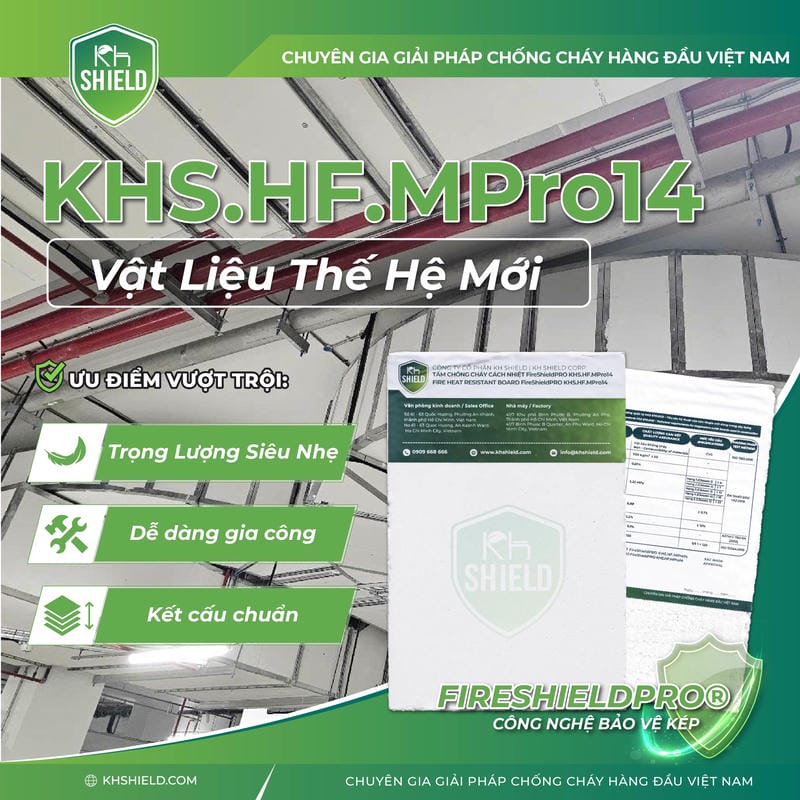
🛡️Choose KHS.HF.MPro14 (14 mm) — Choose Absolute Peace of Mind.
The product has been:
-
Fire-tested for 132 MINUTES at IBST, and
-
Proven non-corrosive through BRANZ research.
📩 Contact KH Shield today to receive test samples for on-site corrosion evaluation.
Update the latest topic
Update highlights

Register for consultation
Consultation on fire and explosion prevention solutions