
 EN
EN VN
VN

 09/09/2026
Thematic
E.Town 6: Grade A Green Office Needs Coordinated Materials

14/07/2026


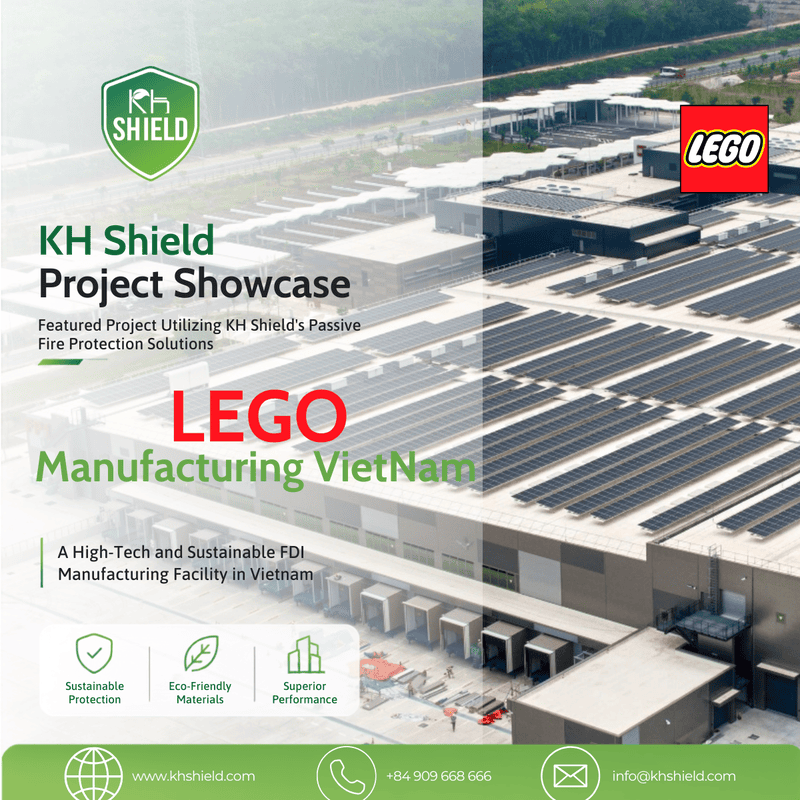
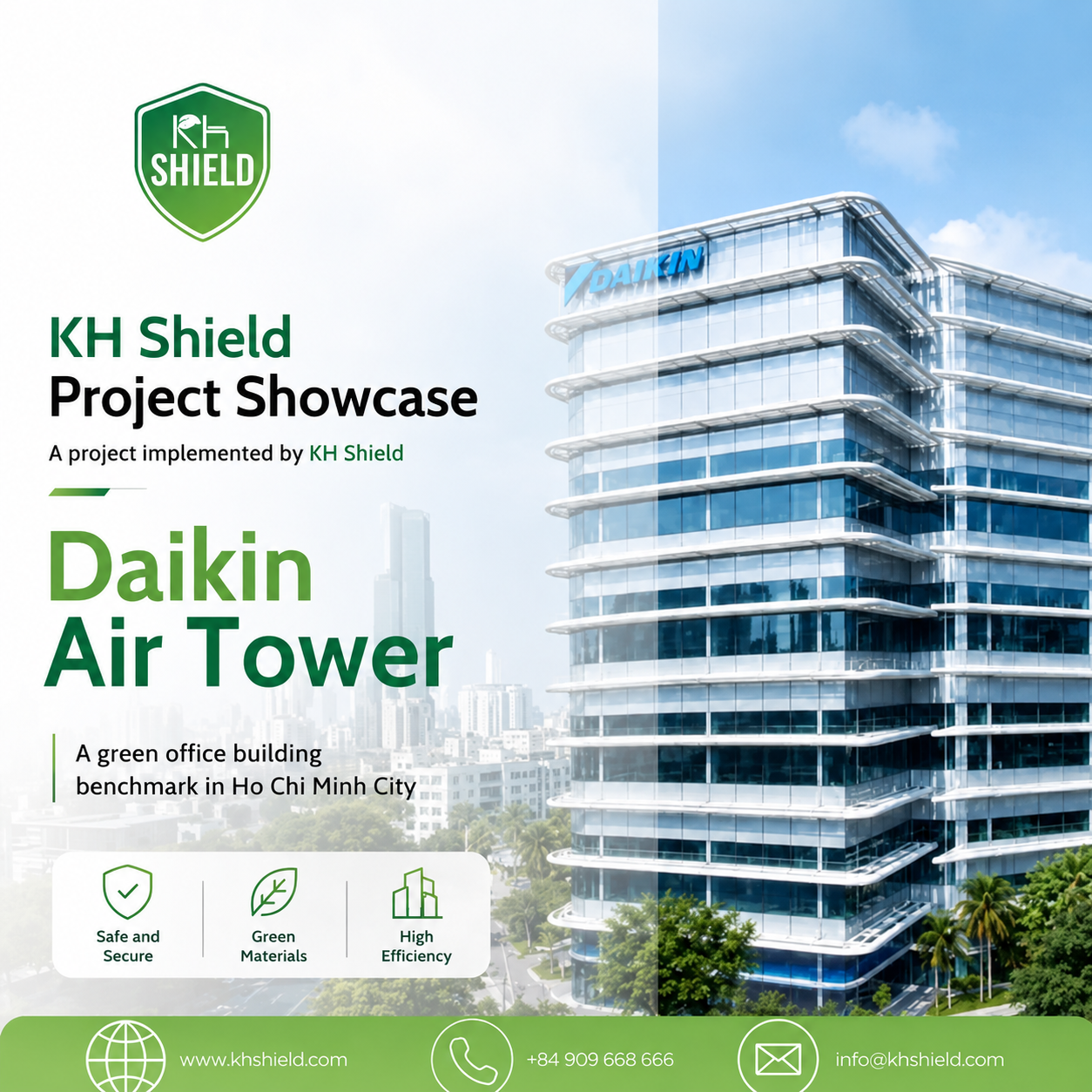
Following Daikin Air Tower and LEGO Binh Duong, E.Town 6 is another notable example in KH Shield’s content series on green buildings, ESG and the role of technical materials in modern construction.
If Daikin Air Tower represents the trend of office buildings achieving multiple high-level green certifications, and LEGO Binh Duong represents the direction of FDI factories setting higher sustainability standards, E.Town 6 brings another perspective to the market: a Grade A green office is not only about a beautiful facade. It also needs a coordinated technical material system from within.
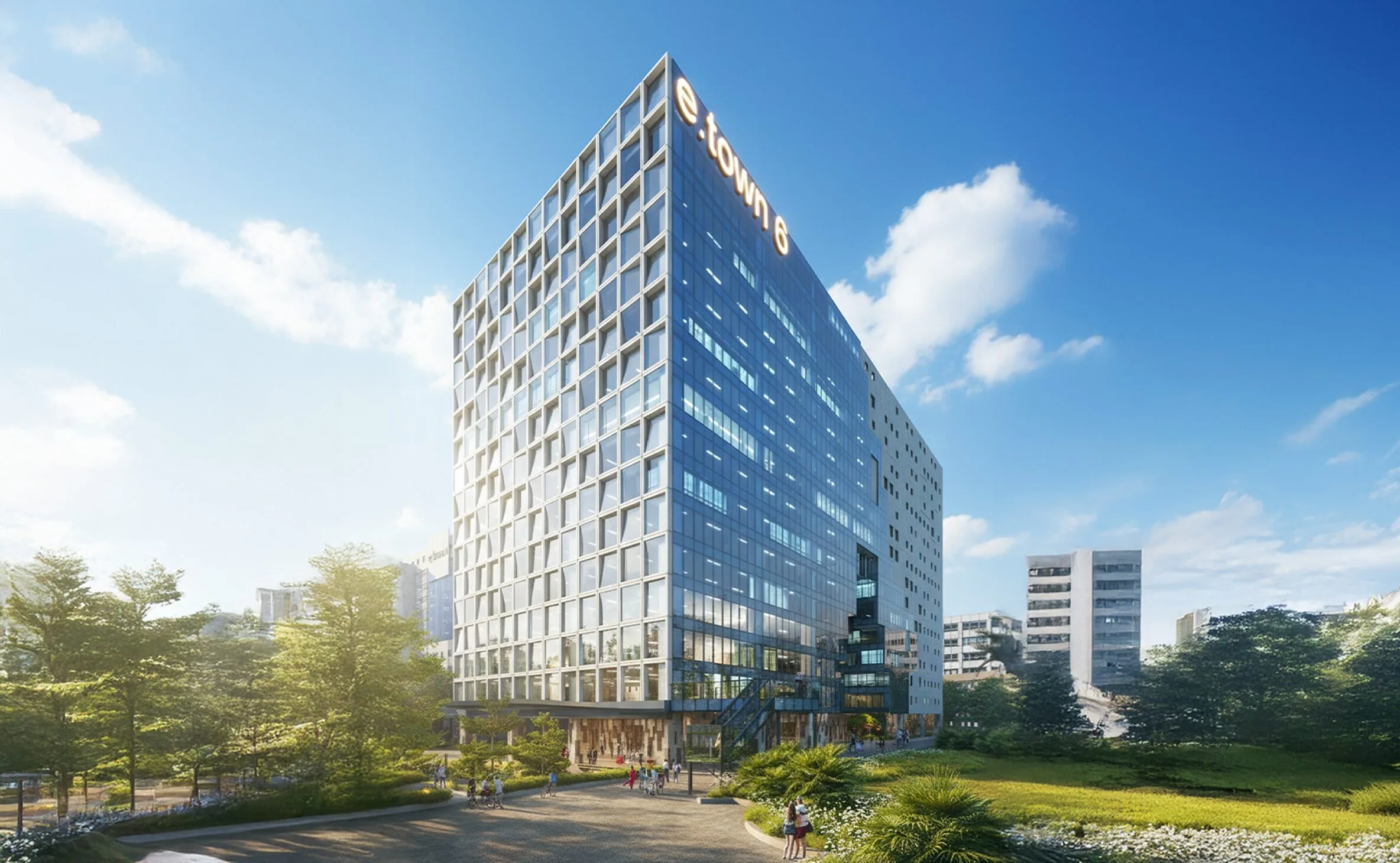
According to the official E.Town 6 website, the project has been awarded LEED Platinum, the highest certification level from the U.S. Green Building Council. USGBC also lists E.Town 6 Office Building as an awarded LEED Platinum project, while CBRE describes it as the first Grade A green building with LEED Platinum certification standard in REE Group’s Tan Binh E.Town cluster.
The story of E.Town 6 shows how Grade A office standards in Vietnam are evolving. A modern office building is no longer evaluated only by location, floor area, exterior design or tenant amenities. It must also meet higher expectations for operational efficiency, workplace quality, technical safety and long-term risk control.
For KH Shield, this is an important perspective in the communication direction: Green from materials, safe from within. Fire-rated, fire-stopping, insulation and safe finishing materials should not be seen as secondary elements behind a green building. They are part of the technical foundation that helps a building operate more safely, more sustainably and more responsibly toward its users.
NỘI DUNG BÀI VIẾT
- From Daikin Air Tower and LEGO Binh Duong to E.Town 6
- E.Town 6 and the Grade A Green Office Milestone
- A Green Office Is Not Only About a Beautiful Facade
- What Is a Coordinated Technical Material System?
- Fire-Rated Materials in Green Office Buildings
- Green Buildings Must Go Together with Passive Fire Safety
- KH Shield’s Role in the Green Building Content Series
- E.Town 6 and the Trend of Responsible Material Selection
- Green Offices Need Safety from Within
From Daikin Air Tower and LEGO Binh Duong to E.Town 6
KH Shield’s green building content series does not claim that a single material product is the factor that helps a project achieve green certification. Instead, the series focuses on one consistent message: a green building should also be a safe building.
In the case of Daikin Air Tower, the story is about a modern office building with high-level green certifications, where operational quality, occupant health and passive fire safety should be considered together.
In the case of LEGO Binh Duong, the story moves to the FDI factory segment, where sustainability is not only about renewable energy, but also about technical systems, risk governance and operational safety in a large-scale production environment.
With E.Town 6, the focus is on Grade A green offices. This type of building has high expectations for image, tenant experience, operational quality and technical standards. As a result, the internal material system must do more than support design. It must also contribute to safety, durability and long-term operation.
E.Town 6 and the Grade A Green Office Milestone
E.Town 6 was developed at a time when the Ho Chi Minh City office market has become increasingly focused on green standards, energy efficiency and user well-being. Businesses today do not only look for a convenient location or a visually attractive workplace. They also pay attention to operational standards, indoor environmental quality and the sustainability commitment of the building.
The official E.Town 6 website introduces the project as offering around 37,000 square meters of premier-grade office space and highlights its LEED Platinum certification. This certification reflects the project’s direction toward reducing building carbon emissions and promoting a healthier workplace environment for tenants.
This shows that Grade A offices are no longer only about floor area, lobby design, high-speed elevators or modern facades. In the new phase, Grade A offices need to meet requirements for environment, operation, user health and technical safety at the same time.
A Green Office Is Not Only About a Beautiful Facade
When people talk about green offices, they often think of modern glass facades, greenery, natural lighting, green roofs or energy-saving systems. These elements are important, but they are not enough to define a truly green building.
A green office building should be considered across multiple layers:
- Architectural layer: facade, building envelope, greenery and natural lighting.
- Operational layer: HVAC, lighting, water management and energy control.
- Indoor environment layer: air quality, thermal comfort and user experience.
- Technical layer: MEP systems, ductwork, technical rooms, insulation and fire-rated materials.
- Safety layer: evacuation, smoke control, fire spread prevention and fire resistance.
- Governance layer: technical documentation, material records, testing, maintenance and long-term operation.
A beautiful facade can create strong visual impact. However, long-term sustainability depends on how the internal systems are designed, how materials are selected, how they are installed and how the building is operated over time.
That is why a Grade A green office needs a coordinated technical material system, not only the elements that can be seen from the outside.
What Is a Coordinated Technical Material System?
In an office building, technical materials are not located in only one area. They appear across ceilings, partitions, corridors, escape routes, technical rooms, electrical rooms, MEP systems, ductwork, fire-rated doors and finishing areas.
A coordinated technical material system should meet several requirements:
- It should be suitable for the design and function of each area.
- It should support passive fire safety where required.
- It should help limit fire spread, smoke spread and heat transfer during an incident.
- It should be practical for real construction conditions.
- It should have proper technical documentation, testing or certification where applicable.
- It should support long-term operation and maintenance.
- It should not compromise aesthetics in finishing areas.
For Grade A offices, these requirements are even more important. Tenants do not only need a beautiful workplace. They also need a safe, stable, efficient and ESG-aligned working environment.
Fire-Rated Materials in Green Office Buildings
In green office buildings, fire-rated, fire-stopping and insulation materials should be understood correctly. They are not only materials used for fire safety compliance. They are part of a broader strategy for safe and sustainable operation.
Relevant areas in office buildings may include:
- Fire-rated ductwork.
- Fire-rated partitions.
- Technical ceilings and walls.
- Fire-rated doors.
- Corridors and escape routes.
- Electrical rooms, mechanical rooms and technical rooms.
- Lobbies, corridors and public spaces.
- Penetration sealing, fire-stopping points and insulation areas.
These components may not appear prominently in project marketing images. However, they are part of the internal safety layer that helps the building control risks during operation.
In the green office trend, technical materials must be selected carefully because the building is not only expected to save energy. It is also expected to support health, safety and long-term user experience.
Green Buildings Must Go Together with Passive Fire Safety
A building with green certification cannot be considered fully sustainable if it lacks internal safety. Sustainability is not only about reducing electricity, saving water or lowering emissions. It is also about protecting people, limiting risk and maintaining stable operation throughout the building lifecycle.
From an ESG perspective, passive fire safety is closely connected to two pillars:
- Social: protecting building occupants, employees and surrounding communities.
- Governance: controlling technical standards, material documentation, operation procedures and building risks.
Therefore, solutions such as fire-rated boards, fire-stopping materials, insulation boards, fire-rated ductwork and safe finishing materials should be considered part of the green building strategy, not separate technical items handled only at the final stage.
KH Shield’s Role in the Green Building Content Series
Across the content series on Daikin Air Tower, LEGO Binh Duong and E.Town 6, KH Shield’s role should be communicated consistently and accurately.
KH Shield does not claim that its materials are the factor that helped these projects achieve green certifications. A more appropriate position is: KH Shield provides fire-rated, fire-stopping, insulation and safe finishing material solutions that contribute to the internal safety foundation of modern buildings.
For project types such as offices, hotels, apartments, shopping centers, factories and public buildings, KH Shield material solutions can be considered for various scopes:
- Fire-rated ductwork systems.
- Technical walls, ceilings and partitions.
- Building components requiring enhanced fire protection.
- Corridors and escape routes.
- Lobbies and public spaces.
- Finishing areas that require both aesthetics and safety.
- Areas requiring fire-stopping, insulation or fire spread control.
The story of E.Town 6 shows that Grade A green offices need not only architectural and operational standards, but also reliable technical materials inside the building. This is where fire-rated, fire-stopping and insulation material solutions can play an important role.
E.Town 6 and the Trend of Responsible Material Selection
E.Town 6 shows that Grade A office standards in Vietnam are changing. New office buildings no longer compete only through location, floor area or amenities. They also compete through green standards, operational efficiency and workplace quality.
This raises important questions for investors, contractors and consultants:
- Are the internal materials aligned with the green building direction?
- Are technical areas designed with suitable safety materials?
- Are corridors, escape routes and technical rooms protected against fire spread risks?
- Do the materials have clear technical documentation?
- Do the technical solutions support long-term building operation?
- Is the building safe from within, not only green from the outside?
These questions reflect the trend of responsible material selection in modern green office buildings.
Green Offices Need Safety from Within
E.Town 6 is a representative example of the Grade A green office trend in Ho Chi Minh City. When a building targets high standards for environment, energy performance and user experience, its internal material system should also be viewed as part of the sustainability strategy.
A green building is not only a building with a beautiful facade. It should also have efficient systems, suitable materials, safe spaces and long-term risk control.
In this journey, fire-rated, fire-stopping, insulation and safe finishing materials are not secondary elements. They are part of the technical foundation that helps green buildings become safer, more sustainable and more responsible toward their users.
KH Shield – Green from materials, safe from within.
Contact KH Shield for consultation on fire-rated, fire-stopping, insulation and safe finishing material solutions for green offices, hotels, apartments, shopping centers, factories and modern projects.
Update the latest topic
Update highlights
Register for consultation
Consultation on fire and explosion prevention solutions