
 EN
EN VN
VN

 09/09/2026
Thematic
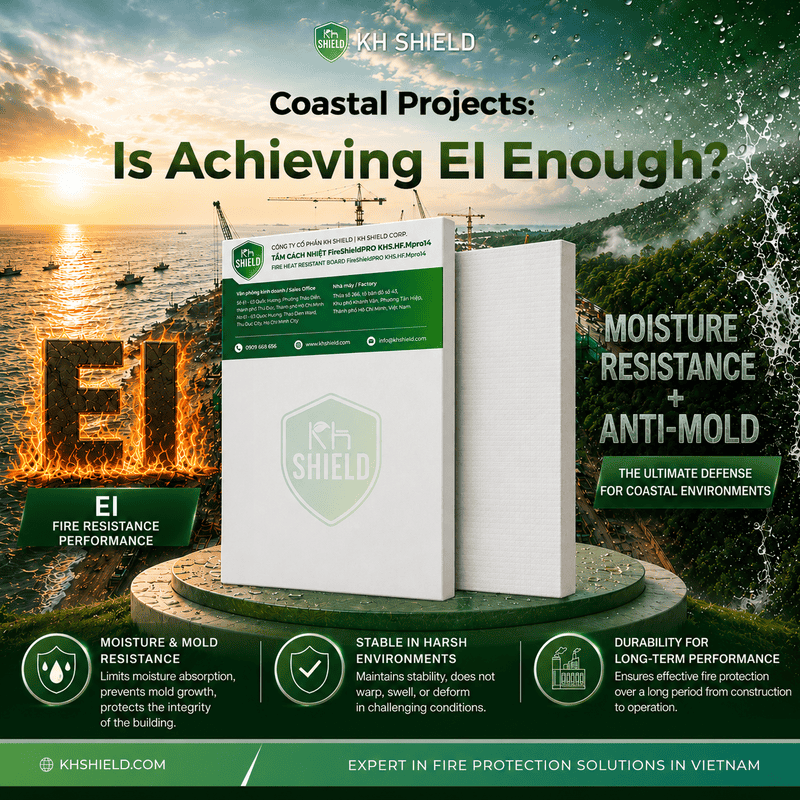
Coastal Construction: Is EI Rating Alone Enough?

13/08/2026


NỘI DUNG BÀI VIẾT
- Coastal Construction: Is an EI Rating Alone Enough?
- Why Do Coastal Buildings Need More Than an EI Rating?
- 3 Key Criteria When Choosing Fire-Resistant Boards for Coastal Construction
- 1. Fire Resistance and EI Performance
- 2. Moisture and Mold Resistance
- 3. Long-Term Stability and Durability
- KH Shield FireShieldPRO – Fire-Resistant Solutions for Coastal Construction
- Choosing Fire-Resistant Materials Is More Than Choosing an EI Rating
- Frequently Asked Questions
- Is EI rating important for coastal construction?
- What properties should fire-resistant boards for coastal buildings have?
- Why shouldn’t EI rating be the only factor when choosing fire-resistant materials?
- Does KH Shield provide fire-resistant solutions for coastal construction?
Coastal Construction: Is an EI Rating Alone Enough?
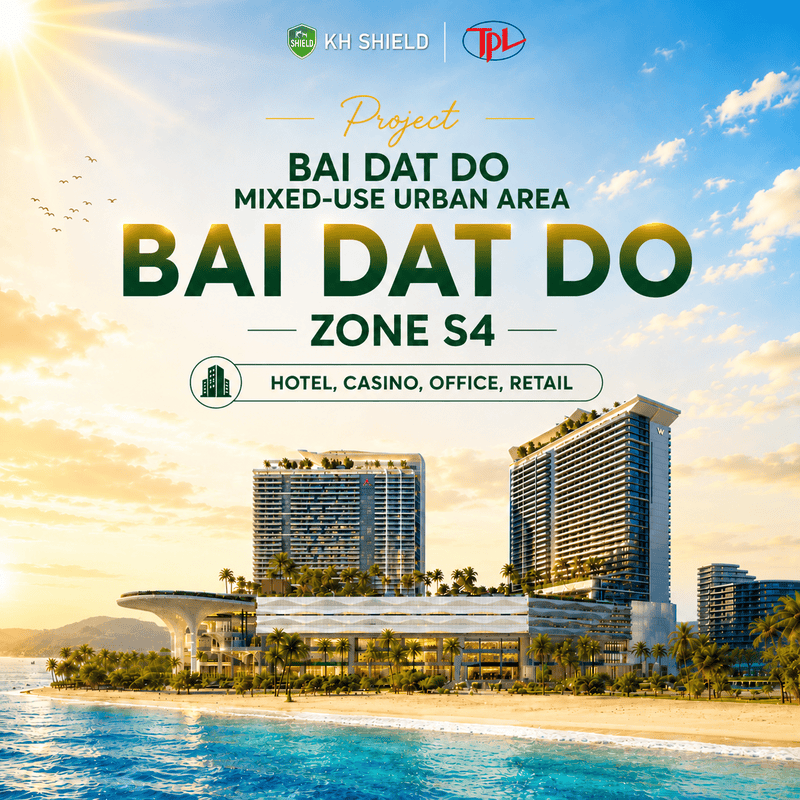
Coastal developments in Ha Long, Da Nang, Phu Quoc and other marine environments are constantly exposed to high humidity, salt-laden air, moisture and harsh environmental conditions.
For these projects, fire protection requirements should not stop at achieving the required EI rating at the time of testing or inspection.
So, when selecting fire-resistant materials for coastal construction, is EI the only criterion that matters?
Not necessarily.
In coastal environments, fire-resistant materials should also provide moisture resistance, mold resistance and long-term dimensional stability under demanding conditions.
A fire protection system should not only meet performance requirements at project handover but also maintain its stability and durability throughout the building’s operational life.
Why Do Coastal Buildings Need More Than an EI Rating?
The EI classification is an important criterion for evaluating the fire resistance performance of a building element:
- E – Integrity: The ability to maintain integrity and prevent flames and hot gases from passing through the construction.
- I – Insulation: The ability to limit heat transfer to the unexposed side of the construction.
However, real-world building performance involves more than fire resistance alone.
Coastal buildings may be exposed to high humidity, salt spray, temperature fluctuations and other aggressive environmental factors for extended periods.
Therefore, selecting fire-resistant boards for coastal construction requires a broader assessment of material performance—not simply a single EI value.
3 Key Criteria When Choosing Fire-Resistant Boards for Coastal Construction
1. Fire Resistance and EI Performance
Fire resistance remains the fundamental requirement.
Fire-resistant boards should be selected according to the project’s design requirements, system configuration and required fire-resistance rating for each application.
However, achieving an EI rating is a necessary requirement, not the only factor determining whether a material is suitable for a coastal environment.
2. Moisture and Mold Resistance
High humidity is one of the defining characteristics of coastal environments.
Materials with the ability to limit moisture absorption and resist mold growth can help maintain system stability, reduce the potential impact of humid conditions and support the long-term durability of the building.
This is particularly important for fire-resistant board applications in areas exposed to high humidity or limited ventilation.
3. Long-Term Stability and Durability
A fire protection system should not only satisfy requirements during inspection and handover but should also maintain its performance throughout the building’s service life.
For this reason, investors, designers and contractors should consider a material’s ability to maintain dimensional stability, minimize deformation and retain durability under actual operating conditions.
KH Shield FireShieldPRO – Fire-Resistant Solutions for Coastal Construction
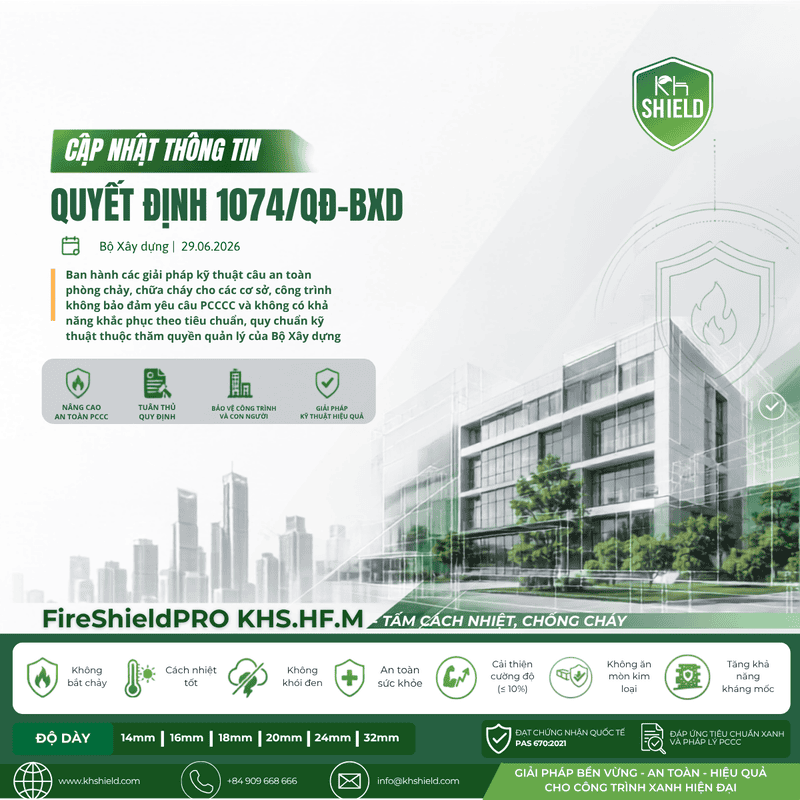
For projects with demanding environmental conditions, KH Shield FireShieldPRO fire-resistant and thermal-insulation boards are developed with a focus on combining fire protection requirements with practical environmental performance.
In addition to fire-resistance requirements, the product range is designed with properties aimed at providing moisture resistance, mold resistance, stability in harsh environments and long-term durability.
These characteristics make the material suitable for consideration in applications where fire protection systems must perform reliably under specific environmental conditions, including coastal construction.
Choosing Fire-Resistant Materials Is More Than Choosing an EI Rating
For coastal construction, EI remains an essential performance criterion—but it should not be the only consideration when selecting fire-resistant materials.
Investors, design consultants and contractors should evaluate the solution as a whole, including:
Fire resistance + moisture resistance + mold resistance + dimensional stability + durability + suitability for the project’s actual environmental conditions.
An effective fire protection solution should not only meet requirements at the time of inspection but should also support long-term stability and durability throughout the building’s operational life.
For coastal construction, choosing the right fire-resistant material means choosing a solution designed for the project’s real-world conditions—not simply choosing an EI rating.
Frequently Asked Questions
Is EI rating important for coastal construction?
Yes. EI remains an important criterion for evaluating the fire resistance performance of a building element. However, coastal projects should also consider moisture resistance, mold resistance, dimensional stability and long-term durability.
What properties should fire-resistant boards for coastal buildings have?
In addition to the required fire-resistance performance, fire-resistant boards should be evaluated for moisture resistance, mold resistance, dimensional stability and durability under high humidity, salt spray and other harsh environmental conditions.
Why shouldn’t EI rating be the only factor when choosing fire-resistant materials?
EI primarily describes the fire-resistance performance of a specific construction under defined testing conditions. In real-world applications, materials are also exposed to environmental factors and long-term use, so overall suitability should be considered.
Does KH Shield provide fire-resistant solutions for coastal construction?
KH Shield develops FireShieldPRO fire-resistant and thermal-insulation boards designed to meet fire-protection requirements while addressing practical performance considerations across different building environments.
Update the latest topic
Update highlights


Register for consultation
Consultation on fire and explosion prevention solutions